
Podcast: Play in new window | Download
How to Use Internal Family Systems for Homeschool Moms
Internal Family Systems for homeschool moms is a topic close to my heart. This modality has been one of the most helpful influences on my coaching life and my own internal work.
So how do I describe it simply while you’re watching the kids at the playground or driving them to Forest School? I’ll use your language. Really, it’s everyone’s language.
What Internal Family Systems Sounds Like in Real Life
Here’s what I mean. We say, “One part of me is excited about the upcoming homeschool mom spring retreat. But another part of me is worried I won’t have time to be truly present there.”
Internal Family Systems is all about honouring each of these parts. One part is excited for time away and fresh clarity. Another part is worried she doesn’t have enough time, and she feels bad that her kids are at home without her.
That’s exactly why I want to talk about Internal Family Systems for homeschool moms: we need to honour all our different parts.
Why IFS Belongs in Your Homeschool Journey
On today’s episode, I’m introducing you to Internal Family Systems. (Consider this a super simplified, likely oversimplified, flyover of IFS.) I think it’s a truly valuable modality that can support your journey toward health, wellness, and healing.
The healing work of IFS will move you toward authenticity, confidence, and purpose. And that’s what Season #5 of the Homeschool Mama Self-Care Podcast is all about.

What Is Internal Family Systems?
According to Psychology Today, this is a synopsis of Internal Family Systems:
[Psychology Today quote unchanged]
Go Deeper: IFS Support Group and Book Club
So today, I’m unpacking Internal Family Systems and why it matters for moms like us.
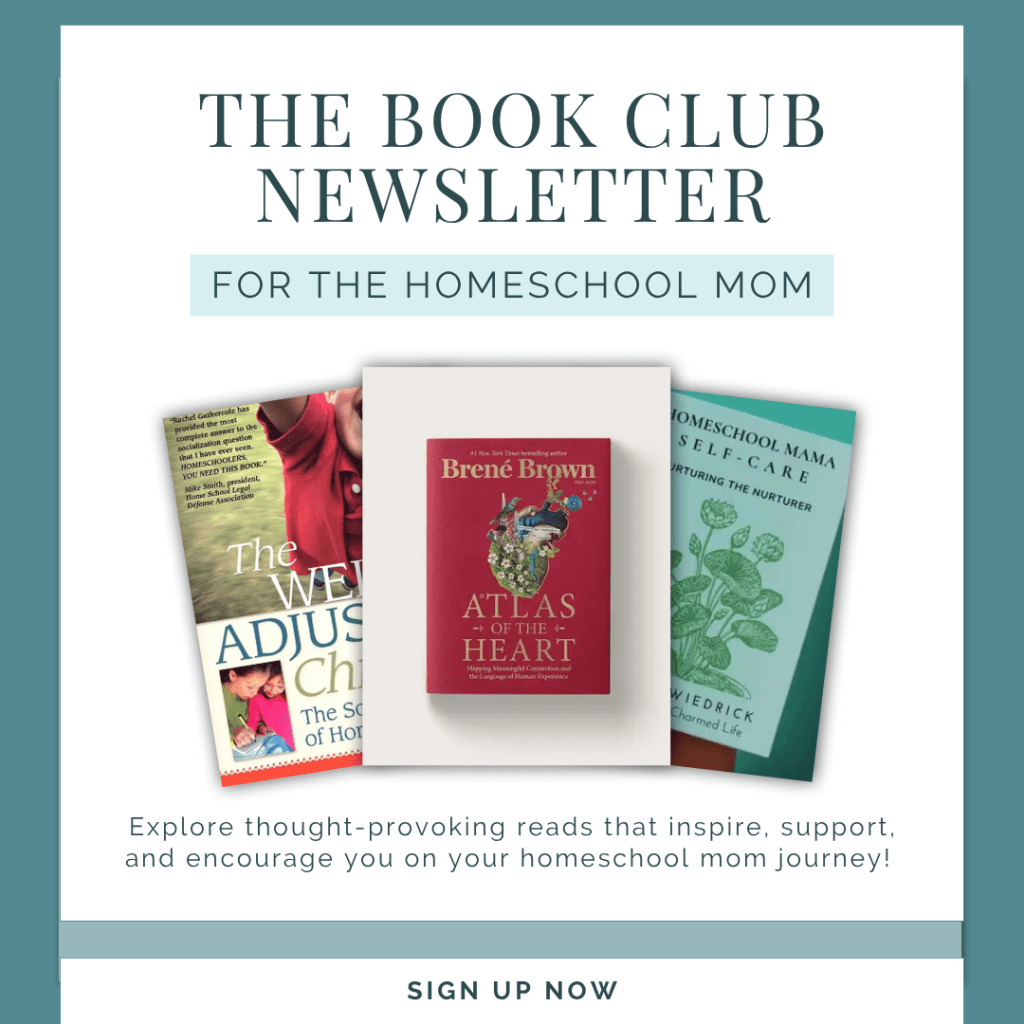
Want to discuss Dick Schwartz’s book, No Bad Parts? Join me in the Homeschool Mama Book Club.
Why Internal Family Systems Matters for Homeschool Moms
Why would you even care about doing this work? Because you matter. You want to live a life of authenticity, confidence, and purpose, and you want that for your kids too. Your life matters, and so do theirs.
Christine Dixon, the IFS coach, shares this:
What if loving all the parts inside yourself is practice for loving all the parts or people outside yourself?
Christine Dixon, Wounded Healer @theordinarysacred
To whatever extent you offer this to yourself, you can offer it to your kids. How you approach yourself influences how you approach literally everyone in your world.
So it’s time to learn to love all the parts inside yourself. That includes the shamed parts, the invalidated parts, and the uncomfortable parts. It includes the parts you don’t want others to see, and even the parts you don’t want to see yourself.
Where I First Learned About IFS
I began learning about Internal Family Systems through Instagram. Classic learning for us these days: on the interweb.
(Entire side note: our graduating daughter, our third, routinely shares what she learns from TikTok. I don’t have a TikTok account, and I won’t be getting one. But once again, learning happens everywhere, even on TikTok. But I digress…)
You can learn more about Internal Family Systems through Christine Dixon’s resources:
YouTube: The Basics of Internal Family Systems
Instagram: Where she hangs out on Instagram
Website: You can find Christine Dixon here

Principle 1: We Have an Internal Family, Not Just an External Family
Is there a part of you that wishes another part of you didn’t respond so reactively?
Or a part of you that goes into fight or flight when your kiddo doesn’t listen? Maybe it shows up when they’re unkind to a sibling or say something disrespectful.
Or is there a part of you that hides? A part that doesn’t declare what she really thinks and feels when something threatens her sense of wellbeing?
Is there a part of you that must keep the house tidy? That must keep the kids on task, especially in front of Aunt Matilda? That insists you finish sixty-two things on your to-do list before you start dinner?
In Internal Family Systems, these are all different parts of you. Together, they make up your internal family.
Every one of these parts matters, and each has a reason for being within you. Some are hyper-protective, while others manage your internal environment so you feel in control. And some parts hide, letting the others manage, fight, and protect.
We have an internal family, not just an external family.

Principle 2: Some Parts Carried Big Burdens When We Were Young
There are parts of us that had to shoulder the big cares and responsibilities of our younger selves. This often happens when we experience attachment injuries or trauma.
And to this day, those parts continue to advocate, take control, manage, or parent the other parts.
These parts are overworked and overburdened. They need healing, and IFS offers a gentle way to begin.
Dick Schwartz says this about our overworked and overburdened selves:
Let’s Talk About Your Parts
When I share about these vulnerable, overburdened, defensive, and overmanaging parts, what comes up for you?
- Where do you overmanage or overprotect?
- Do you recall when you first noticed these parts?
- What messages did you receive at those pivotal moments?
- What parts of you had to shoulder the big cares and responsibilities of your younger self?

Principle 3: Your Protective Parts Have Served You
Your overprotecting and overmanaging parts have served you. We don’t do anything that doesn’t serve us somehow.
Here’s what Dick Schwartz says about these parts:
We don’t want to feel shame, pain, loneliness, or fear. So when we do experience them, we find ways to overwhelm them. We use things, activities, caretaking, and maybe even homeschool caretaking.
That was certainly a subconscious intention of mine when I began homeschooling. I was trying to build a utopia out of a painful, tumultuous family-of-origin story. I was trying to capture my charmed life, the name of my website.
Here’s the hard truth. Every effort we spend numbing our shame, pain, loneliness, or fear keeps our true Self from being present in our lives. And that disables our authenticity, confidence, and purpose.
But how do we calm the overprotectors and overmanagers that guard our shame, pain, loneliness, or fear?

Principle 4: Listen to Your Parts So Your True Self Can Lead
According to Internal Family Systems, we need to listen to those parts and honour their stories. We need to recognize their patterns and understand what they’re protecting and why. Then we can integrate these parts with our true Self.
That’s how the true Self can arise.
Dick Schwartz says that Internal Family Systems can be seen as attaching to ourselves. He says this:
“IFS can be seen as attachment theory
Richard C. Schwartz, No Bad Parts: Healing Trauma and Restoring Wholeness with the Internal Family Systems Model
taken inward, in the sense that the client’s Self becomes the good attachment figure to their insecure or avoidant parts. I was initially amazed to discover that when I was able to help clients access their (true) Self, they would spontaneously begin to relate to their parts in the loving way that the textbooks on attachment theory prescribed. This was true even for people who had never had good parenting in the first place. Not only would they listen to their young exiles with loving attention and hold them patiently while they cried, they would firmly but lovingly discipline the parts in the roles of inner critics or distractors. (True) Self just knows how to be a good inner leader.”
Putting Internal Family Systems Into Practice as a Homeschool Mom
You don’t need to master IFS to begin. Start by noticing when “a part of you” speaks up during your homeschool day. Get curious instead of critical. Every part of you is welcome here.
Learn more about Internal Family Systems and Dick Schwartz’s book, No Bad Parts here.
If you want to discuss No Bad Parts with other moms, join me in the Homeschool Mama Book Club.

Big Emotions Journal for the Homeschool Mom
Are you a homeschool mom navigating the ups and downs of daily life with your kids? Introducing the Homeschool Mama’s Toolbox—a powerful resource to help you manage big emotions like anger, guilt, or overwhelm with clarity and intention.
People also ask:
- You can learn more in this discussion with IFS coach, Christine Dixon, and me on the podcast.
- Homeschool Help Podcast for Your (Real) Homeschool Mom Life
- Finding Healing & Purpose When Life is Life-ing
- 16 Practical Self-Compassion Tools to Help Homeschool Moms
- Homeschool Help for Mom: Dealing with her Big Emotions
- How Kristen Neff Informs My Homeschool with Self-Compassion
- Useful Self-Compassion Strategies for the Homeschool Mama
Subscribe to the Confident Homeschool Mom podcast
Originally published April 3, 2023. Updated September 25, 2026.
Call to Adventure by Kevin MacLeod
Link: https://incompetech.filmmusic.io/song/3470-call-to-adventure
License: http://creativecommons.org/licenses/by/4.0/
